Part of Blind Justice, a four-part Channel 4 series on women and the law
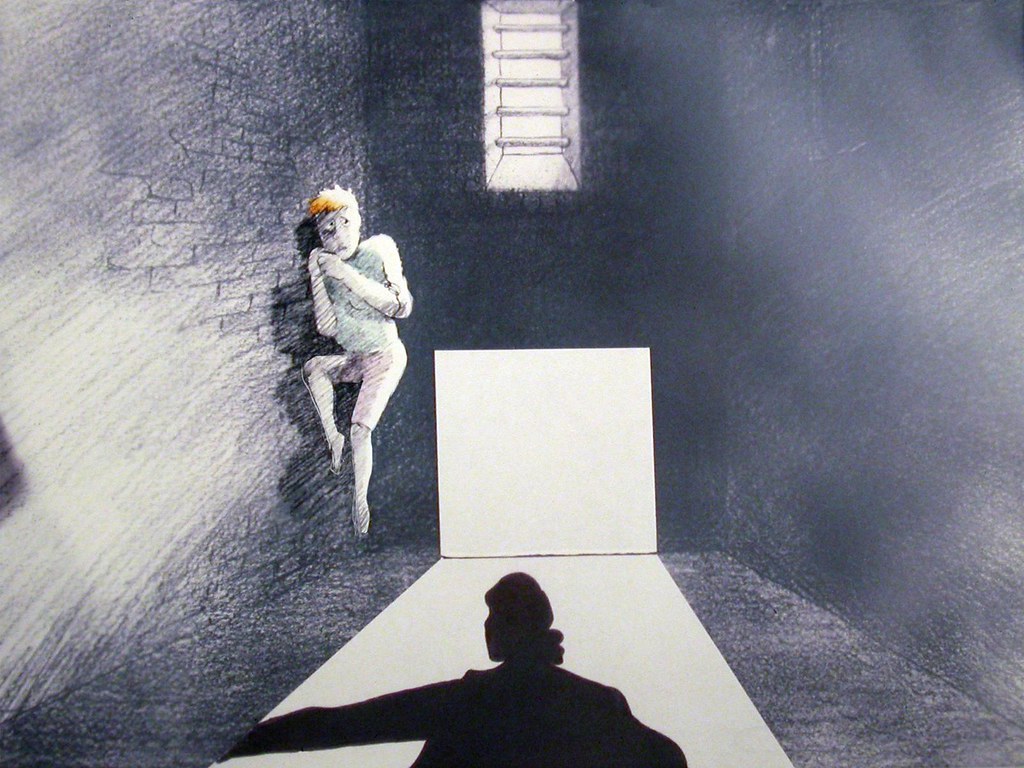
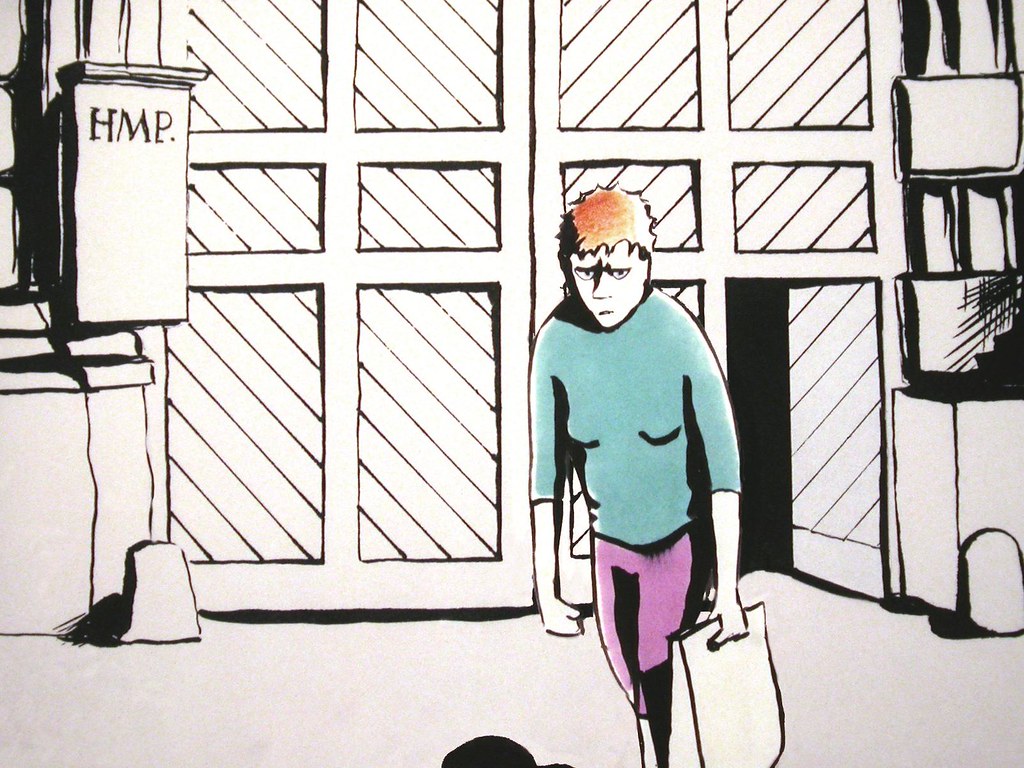
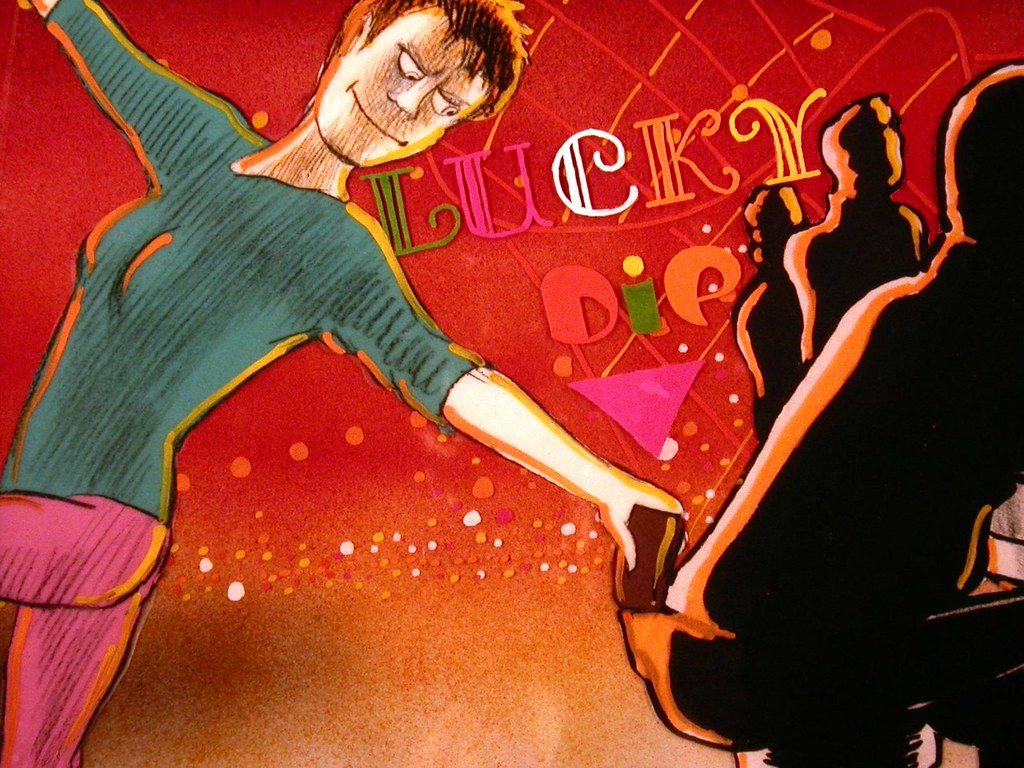
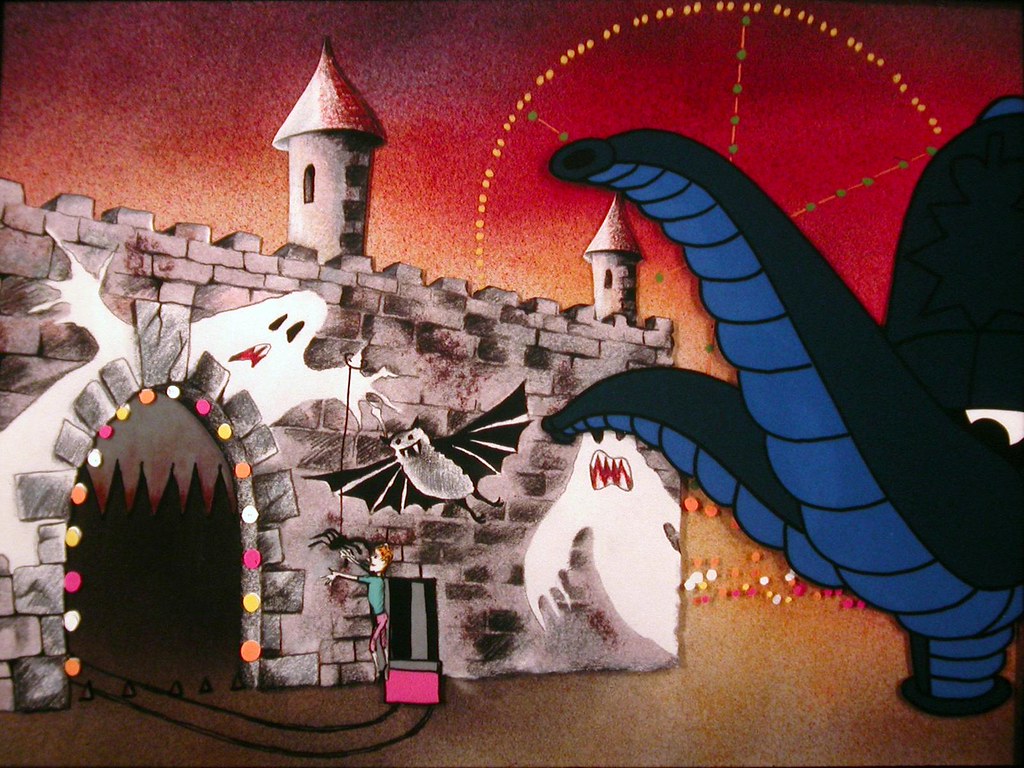
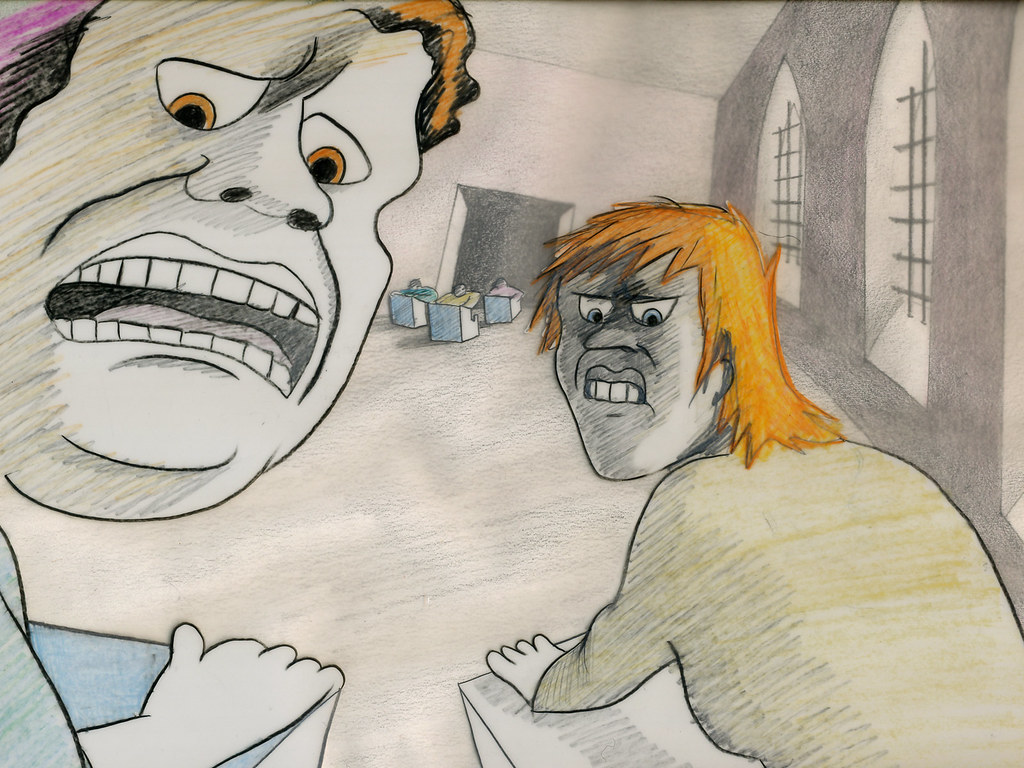
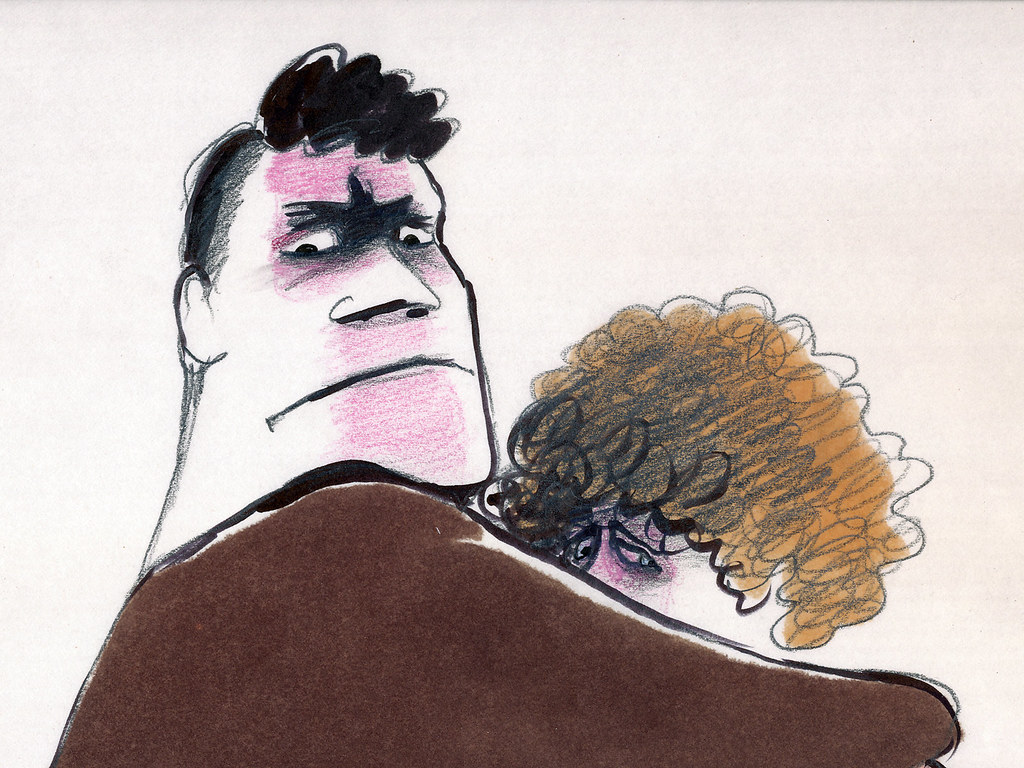
An animated documentary based on the true story of Josie O’Dwyer, with her own voice as personal commentary. The film shows the devastating effect that detention and imprisonment have on young girls who are sent in “for their own protection”.
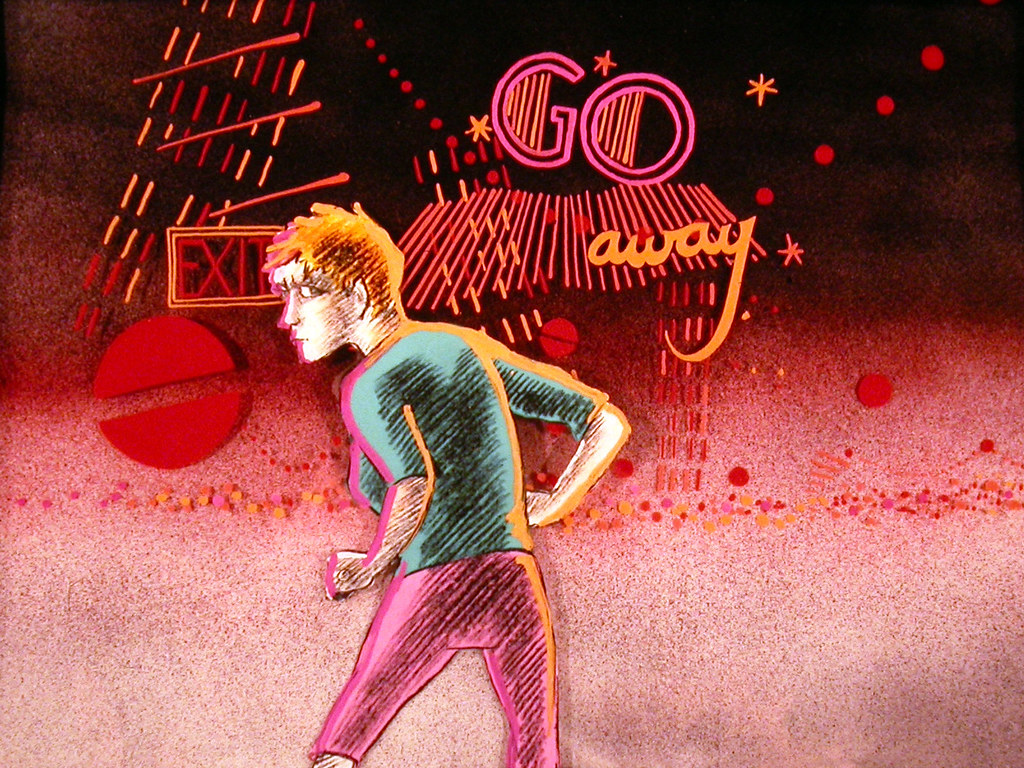
The impact of Some Protection owes much to her ability to evoke visually and kinetically the moods, emotions and feelings of the protagonist, Josie O’Dwyer, as she narrates the true story of her experiences of detention and imprisonment.
James Leahy, The Guardian, 5 November 1987
It is widely assumed that documentary is about Griersonian grit, Flaherty fact and Wiseman wisdom, but this is to neglect the rich and varied tradition of documentary in the animated film. From Winsor McCay’s Sinking of the Lusitania, to Marjut Rimminen’s subjective documentary Some Protection, to Jan Svankmajer’s The Death of Stalinism in Bohemia. Animation has documented the personal, social and political events that have shaped the world.
Dr Paul Wells, National Film Theatre lecture, November 1996
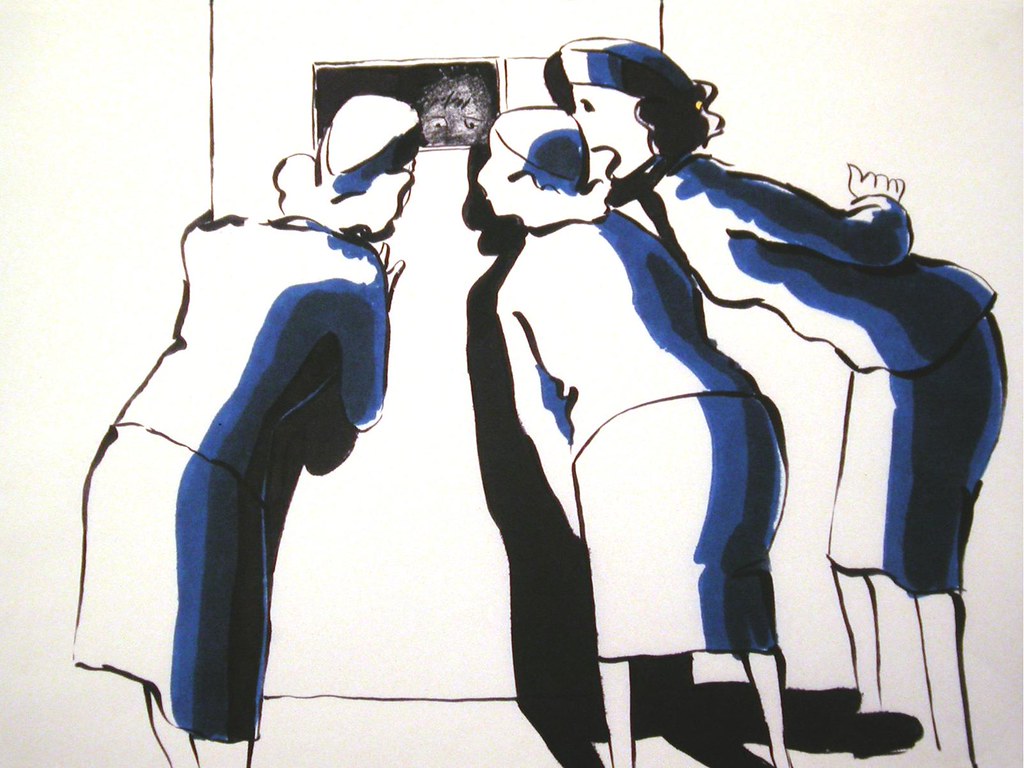
Some Protection … the story of a juvenile delinquent, is interpreted with great visual flair and energy by animator Marjut Rimminen. The graphic style is not far from that of comics and strip-cartoon, especially the True-Life Crime Story of cheap popular fiction. It’s an appropriate style for O’Dwyer’s story of institutionalised violence and despair: the extreme contrasts of light and dark of the prison interiors accord well with a moral world, where the choices are stark.
Brian Ashbee, Architectures of Illusion, 2003
This type of film is now so relatively familiar it may be difficult to imagine how groundbreaking works such as Aardman Studio’s Animated Conversations (1978), or more formally experimental work such as [Marjut Rimminen]’s Some Protection (1987) and Tim Webb’s A is for Autism (1992), appeared at the time they were first seen.
Jayne Pilling, introduction to Animating the Unconscious, 2012, page 6
As an animator, I function best in my room, in a kind of solitary confinement. When Josie says the only escape from horrible reality was to go inside her head, I understood that very well.
Marjut Rimminen, Jayne Pilling, Women and Animation, BFI
Free to stream at the Internet Archive, uploaded by producer Orly Yadin
On the Blind Justice DVD from Yadin Productions, with the other three films of the series
On the DVD of Tricky Women: AnimationsfilmKunst von Frauen (Schüren, Marburg, 2011)
Broadcast on Channel 4 in February 1990 under the series title In Justice, renamed at the last minute because the BBC had a drama called Blind Justice (The Lost Continent)
In the exhibition Animation at the Cutting Edge, Barbican Art Gallery, London, 1992, which showed artwork and screenings of the film and of The Stain
In Captured in Frame, a film festival of imprisonment organised by NACRO, Commonwealth Institute, London, 1993, with a debate
In the celebration programme Ten Years of Award-winning Animation at Channel 4, British Academy of Film and Television Arts, London, 1994
Original artwork and sets in Animation Plus, a thirteen-venue tour from Glasgow in February 1994 to London in January 1996, with The Stain
In the programme British Women Animate at the Tampere International Short Film Festival, 1995, with The Stain and I’m not a Feminist, but…, where Marjut gave an interview to YLE
In the lecture Animation and the documentary form by Dr Paul Wells, National Film Theatre, London, November 1996
In a programme of British documentaries at the Museum of Modern Art, New York, 1999
In a programme of animated films made by women at the AniMadrid Festival, 2004, with The Stain
In a programme of world animated documentary films presented by Marjut at the Finnish/Scottish film seminar No Comments, Edinburgh, 2005
In Marjut’s making-of presentation at IDFA, Amsterdam, 2007
In the AnimaDoc programme at DocPoint, the Helsinki documentary film festival, 2009, in a presentation by Marjut with Learned by Heart
In the Tony Fish Lifetime Achievement Award retrospective at the Bradford Animation Festival, 2009
In A Caring Eye: The Documentary Way, introduced by Clare Kitson at the Bradford Animation Festival, 9 to 13 November 2010
In the documentary film event Toden näköistä at Kiasma, Helsinki, 2013, with Learned by Heart
In 100 vuotta suomalaista animaatiota, the Animatricks online gallery, February to May 2014
Secret Cinema13 March 2007, Curzon Soho, London: the premiere of Learned by Heart, with Many Happy Returns and Some Protection, followed by a conversation with Gareth Evans; organised by animate! and the Finnish Institute
The Times, 17 August 1993, listing Some Protection with The Stain for television. Sight and Sound wrote about The Stain in October and November 1992.
“Arguably, this is a more truthful reality and one which is only possible to document in animation.” Paul Wells, Understanding Animation, Routledge, 1998. Some Protection is the book’s worked example of the documentary tendency in animation, a film that shows Josie O’Dwyer’s reality as she experienced it (page 27).
“The final film, Some Protection by Marjut Rimminen, would attract the most accolades.” Clare Kitson, British Animation: The Channel 4 Factor, Parliament Hill Books, 2008. On the Blind Justice series, in the history of Channel 4’s animation commissioning.
“[Marjut Rimminen] encouraged her class to work with feelings, to articulate them visually and kinetically. The impact of Some Protection … where the visuals give emotional force to the protagonist Josie O’Dwyer’s narration of the true story of her prison experiences, reveals [her] own mastery of this process.” James Leahy, Bristol: Animation and animators, Sight and Sound, Winter 1987/88, page 8. On Marjut teaching at the 1987 Bristol Animation Festival, and the film shown there in the programme Wayward Girls and Wicked Women.
“The goal is to communicate – while protecting the original subject from unwelcome exposure – the personal experiences of someone whose voice is not normally heard in mainstream media.” Brian Ashbee, Animation, Art and Digitality, in Maureen Thomas and François Penz (eds), Architectures of Illusion, Intellect, 2003, pages 43 to 44. On what the animation brings to Josie O’Dwyer’s account: not a stronger claim to objective fact, but an appeal to the emotions through the graphic language of popular fiction.
“The animation is able to compress this account into a short and powerful description. The fact that the woman is not seen reinforces the concept that she, as an offender, is deliberately kept hidden from society.” Roger Noake, Animation Techniques: Planning and Producing Animation with Today’s Technologies, 1988, pages 48 to 49, the example in the chapter on sound and image, with four stills: “Animation is used to counterpoint the harrowing images of prison life with fantasies of life beyond the bars.”
“A peculiarly (though not exclusively) British genre that has flourished since the advent, in 1981, of Channel 4 television, which encouraged and commissioned a wide range of new animation projects, often focussing on strong social issues and true experiences, such as Marjut Rimminen’s Some Protection … about legal injustices to women” Orly Yadin, documentary animation, in Brian McFarlane (ed.), The Encyclopedia of British Film, Methuen and the British Film Institute, 2003, page 181. The entry on animated documentary opens its list of examples with the film; Yadin produced it.
Annabelle Honess Roe, Animated Documentary, Palgrave Macmillan, 2013. The book places Some Protection in the Blind Justice series (page 13); its case study of animated memory is Marjut’s Learned by Heart.
A film “which effectively represents the sheer horror of our penal system”. A review in Spare Rib, 1988.
Maureen Furniss, A New History of Animation, Thames & Hudson, 2016. Places Some Protection in the Blind Justice series (page 408).
Birgitt Wagner and Waltraud Grausgruber (eds), Tricky Women: AnimationsfilmKunst von Frauen, Schüren, Marburg, 2011. Some Protection is on the book’s DVD. Reviewed by Sharon Katz in Animation World Network.
Out of the Animation Ghetto, Animation World Network, on Clare Kitson’s commissions for Channel 4, names Some Protection. The Lost Continent wrote about the Blind Justice series in 2010.
The British Cinema Source Book, 1995, lists the British Film Institute’s viewing copy of Some Protection.